

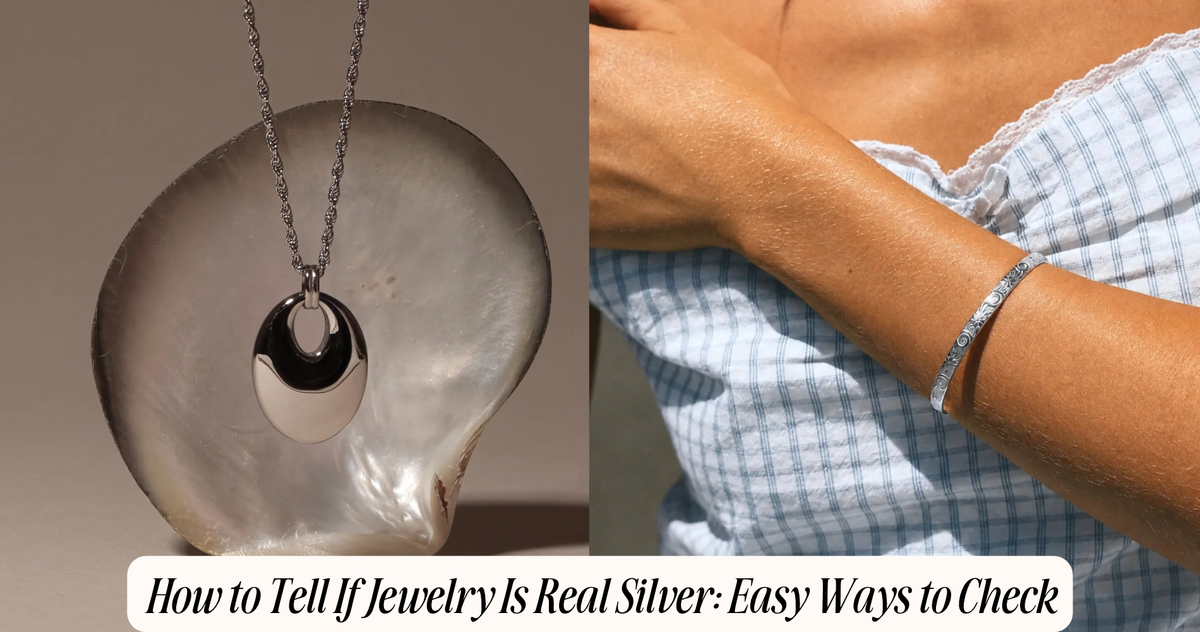
How to Tell If Jewelry Is Real Silver: Easy Ways to Check
How to tell if jewelry is real silver comes down to one question: is it sterling, meaning 92.5% silver? Check for a 925 or Sterling stamp first, then confirm with an ice test and a cloth rub. Each check has limits, so combine two or three before you decide.
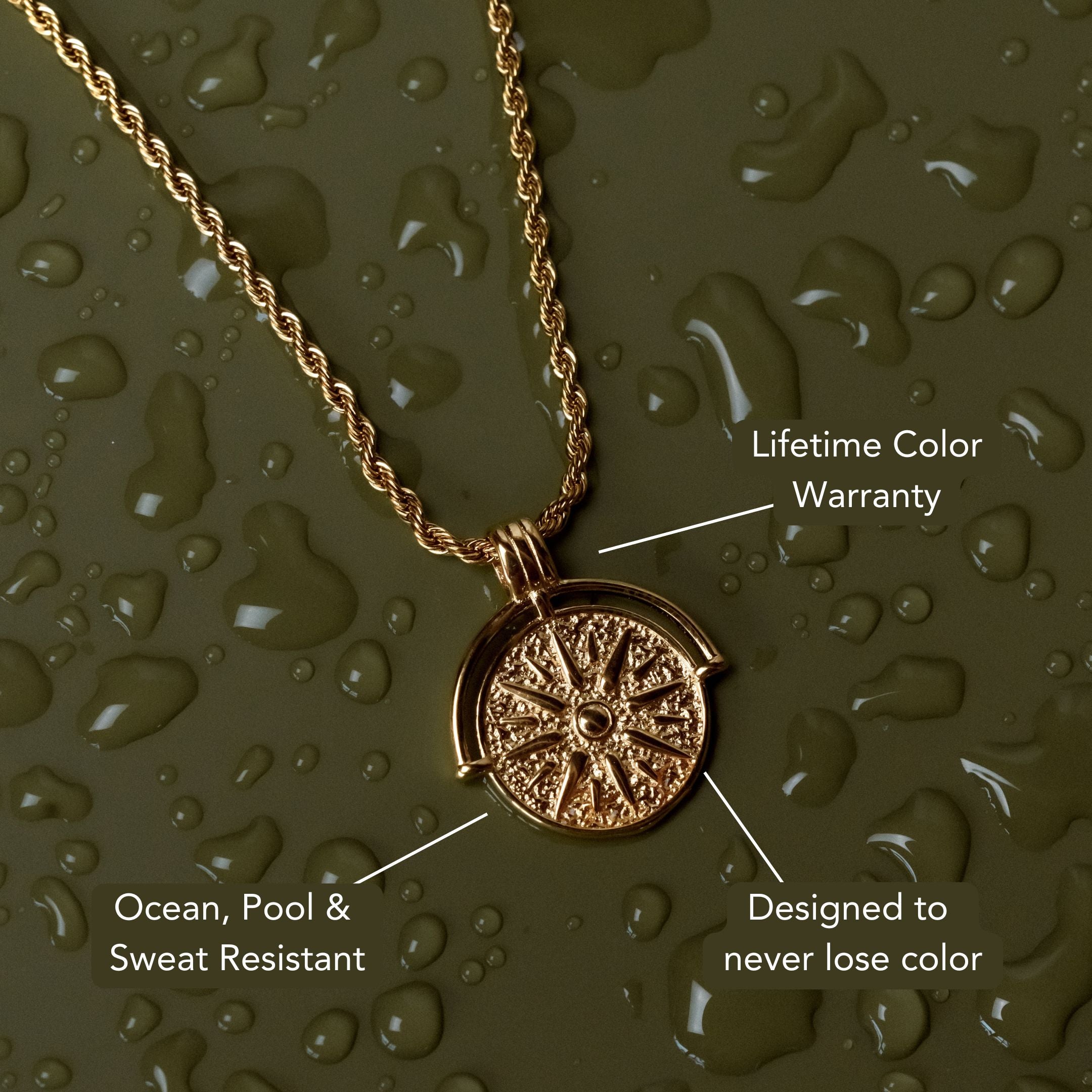
We make silver-color jewelry, so this question comes up often, and the honest answer shapes what you buy. Our silver waterproof jewelry collection is stainless steel in a silver color, not sterling, which is why these checks are worth knowing. In this guide, we will explain what real silver is, which five checks work, where each one fails, and when to ask a jeweler.
Quick answer: Real silver is usually sterling: stamped 925 or Sterling and 92.5% silver. Check the stamp, then run an ice test and a cloth rub. A magnet alone proves little. No home test measures purity, so combine two or three checks and ask a jeweler when the piece matters.
What counts as real silver in jewelry?
Real silver in jewelry usually means sterling silver, an alloy of 92.5% silver and 7.5% other metals, usually copper. Fine silver is 99.9% pure but soft. Silver-plated pieces carry a thin silver layer over another metal, and silver-color pieces may contain none.

Each type ages differently. Sterling tarnishes and polishes clean. Plating can wear through at edges and clasps. Stainless steel resists tarnish, but it is steel, whatever its color.
How to tell if jewelry is real silver: which checks actually work?
Five checks work well together: the stamp, a magnet, an ice cube, a white cloth, and a look at wear points. None proves purity alone, but two or three agreeing results give you a confident answer.
| Check | What it tells you | Main limit |
|---|---|---|
| Stamp | The maker claims 925 or Sterling | Stamps can be faked |
| Magnet | Rules out iron and some steels | Brass, copper and many stainless steels are not magnetic |
| Ice cube | Shows high heat conduction | Copper and aluminum also conduct heat well |
| White cloth | Tarnish transfer suggests silver | Plated pieces can mark cloth too |
| Wear points | Reveals a different metal under plating | Needs a piece with visible wear |
Does a stamp prove jewelry is real silver?
A 925, .925, S925 or Sterling stamp is the fastest clue, but it is a claim, not proof. Stamps can be added to fake pieces, so treat the stamp as your first check and confirm it with at least one physical test.
- Where to look: inside ring bands, on clasps and chain tags, and behind earring posts.
- Good signs: crisp, even marks. Numbers such as 800 or 900 mark lower-silver continental grades.
- Red flags: no stamp on a piece large enough to hold one, or labels like EPNS, silver-plated or silver-tone.
Can a magnet or an ice cube confirm silver?
A magnet can rule out iron-based fakes, and an ice cube can separate silver from stainless steel, but neither confirms silver alone. Use the magnet to eliminate and the ice cube to compare heat conduction.

- Magnet test: Silver is not magnetic, so a strong neodymium magnet should not cling to it. A firm pull means another metal. No pull proves little, because other metals are non-magnetic too.
- Ice test: Silver moves heat faster than most common metals. Set one ice cube on the piece and another on a countertop. Ice on silver melts noticeably faster, while stainless steel melts it slower.
What can a white cloth and your eyes tell you?
Rub the piece firmly with a clean white cloth: sterling often leaves a gray or black smudge from tarnish. Then inspect clasps, edges and ring undersides, where plating wears first and a yellow, orange or gray base metal may show through.
Real sterling also tarnishes unevenly, darker in recesses and engravings and lighter on raised areas. Plated pieces tarnish too, so a smudge confirms silver on the surface, not the metal beneath.
How is sterling different from silver-plated and silver-color stainless steel?
Sterling is silver all the way through, silver-plated jewelry has a thin silver coat over base metal, and silver-color stainless steel is steel finished to look silver. They look alike in photos but behave differently on tests, price and wear.
| Type | Silver content | Ice test | Tarnish |
|---|---|---|---|
| Sterling silver | 92.5% | Melts ice quickly | Darkens, polishes clean |
| Silver-plated | Thin surface layer | Depends on base metal | Plating can wear through |
| Silver-color stainless steel | None | Slower than silver | Resists tarnish |
When is it worth asking a jeweler?
Ask a jeweler when a piece is valuable, antique, set with stones or heavily tarnished, or when your home checks disagree. A professional can use an acid test or an XRF scanner, which measure silver content directly. Home tests cannot.

Request a written report if you plan to insure or sell the piece. Before any test, clean it gently with mild soap and a soft cloth, because dirt and heavy tarnish skew results.
Final Thoughts
Knowing how to tell if jewelry is real silver saves money and avoids disappointment. Start with the stamp, confirm with an ice cube and a white cloth, and use the magnet only to eliminate.
Frequently Asked Questions
Does a 925 stamp always mean real silver?
No. A 925 stamp is a claim of 92.5% silver, and stamps can be added to non-silver pieces. Confirm it with an ice test and a cloth rub, check wear points for plating, and have a jeweler test anything valuable.
Is real silver magnetic?
No. Silver is not magnetic, so a strong magnet should not cling to sterling. Brass, copper and many stainless steels are also non-magnetic, though, so no pull does not prove silver. Use the magnet only to rule out iron-based metals.
Can you tell if silver is real without a stamp?
Often, but less certainly. Run the ice test, rub with a white cloth, check clasps and edges for base metal, and compare weight with a similar piece. A missing stamp on a large piece is a warning sign.
Does real silver turn skin green?
Sometimes. Real sterling tarnishes, and the copper in the alloy can leave dark or greenish marks on skin. Green marks alone do not prove a piece is fake, so use them as a clue and rely on the stamp and physical tests.






Leave a comment
This site is protected by hCaptcha and the hCaptcha Privacy Policy and Terms of Service apply.